
Trip to Garment District
September 23, 2023
September 23, 2023
v 3.1
v 3.1
Trip to Garment District
September 23, 2023
v 3.1
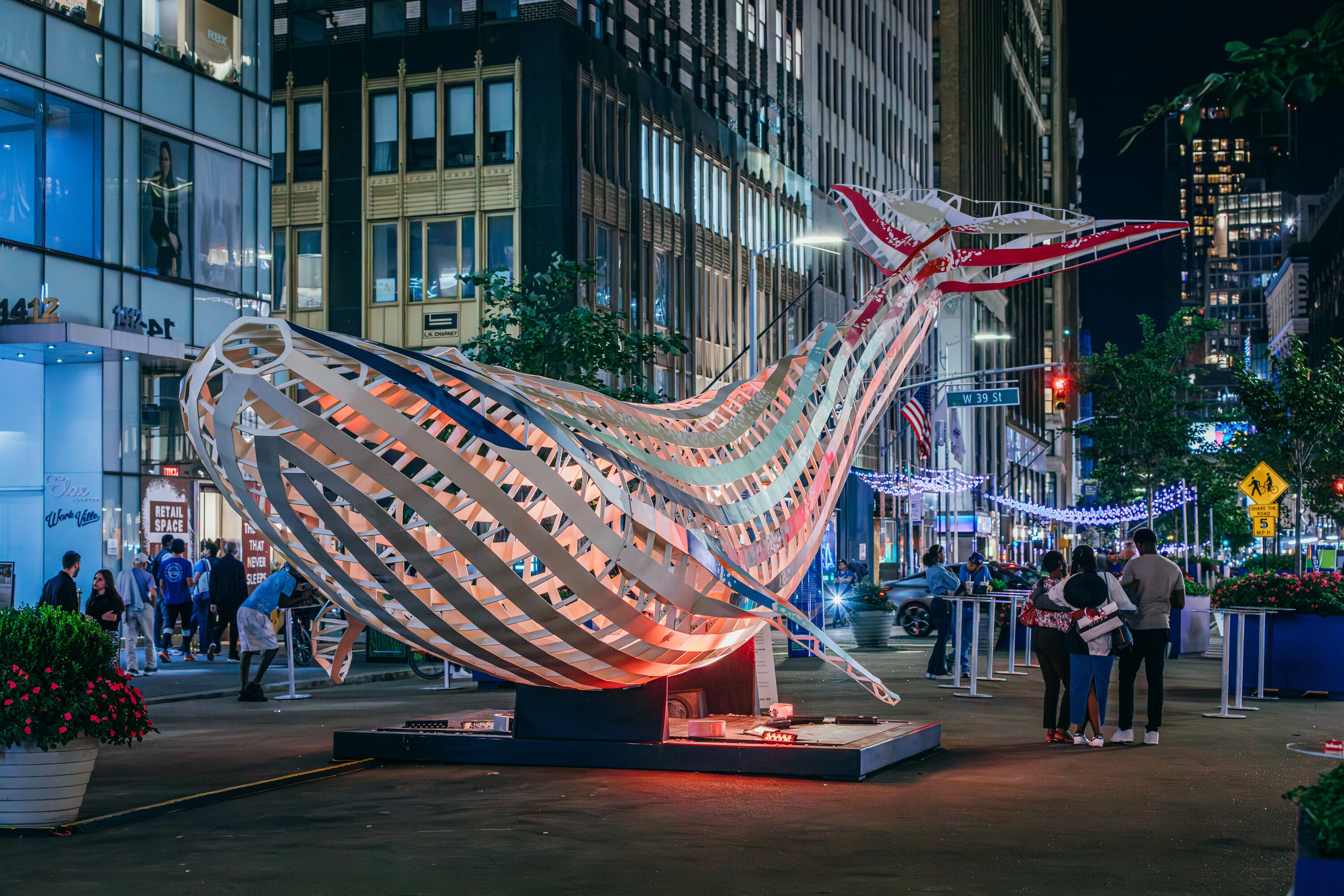
My journey of swatching through the streets of the Garment District in NYC.
Preparation
As I aimed to improve my knowledge and become a more informed fabric shopper before leaving for the garment district for swatching, I watched the enlightening "How to Buy Fabric" video which proved to be an invaluable prelude to my fabric-swatching adventure in the bustling garment district. The video began by demystifying the fundamental disparity between woven and knit fabrics. Woven fabrics are generally easier to sew but exhibit less flexibility and stretch compared to their knit counterparts. As someone relatively new to the world of textiles, this clarification was very helpful. Moreover, the video illuminated the concept of the right side and the wrong side of fabrics, a crucial distinction often overlooked. Understanding that the right side is the side meant to be visible externally was a simple yet transformative realization, enhancing my ability to work with fabrics effectively.
The video delved deeper into the materials used in fabric production. It highlighted the three primary categories: natural, synthetic, and semi-synthetic. It was noted that natural fabrics can present ethical dilemmas when sourced from animals, such as leather. In contrast, synthetic fabrics typically pose environmental issues due to their reduced biodegradability. The video also underscored that while natural fabrics often command higher prices due to their authenticity, synthetic ones are becoming more sophisticated in mimicking natural textures. Furthermore, the video meticulously explored an array of fabrics, from cotton to silk, discussing their unique properties like weight, insulation, and texture. Armed with this newfound knowledge, I embarked on my fabric-shopping journey with confidence, knowing that each fabric selection would be a well-informed choice. Additionally, the video provided practical guidance on purchasing fabric in stores, touching upon critical aspects like yardage, meterage, shrinkage, and the importance of inspecting the fabric up close.
Swatching in the Fabric Shops
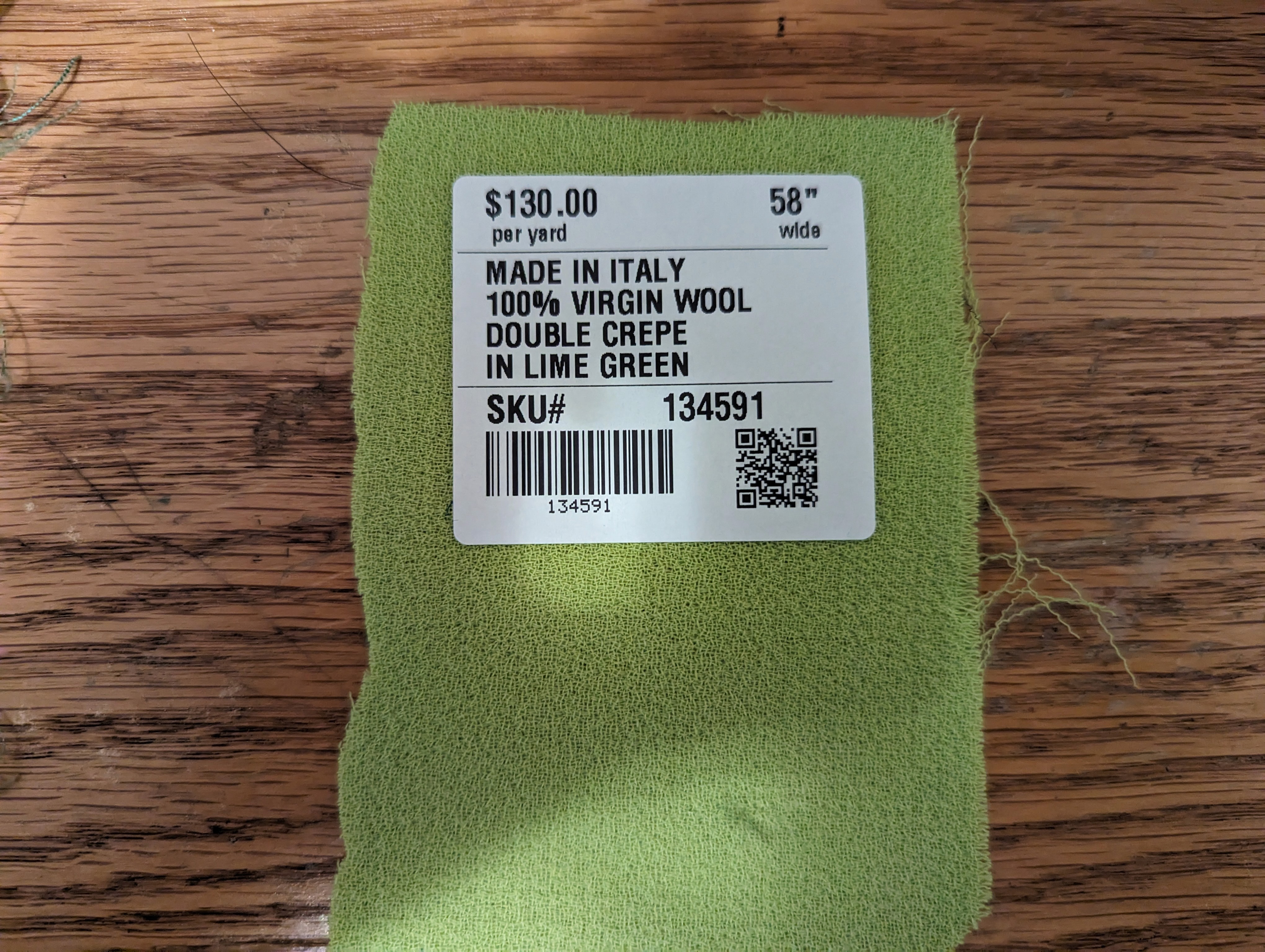
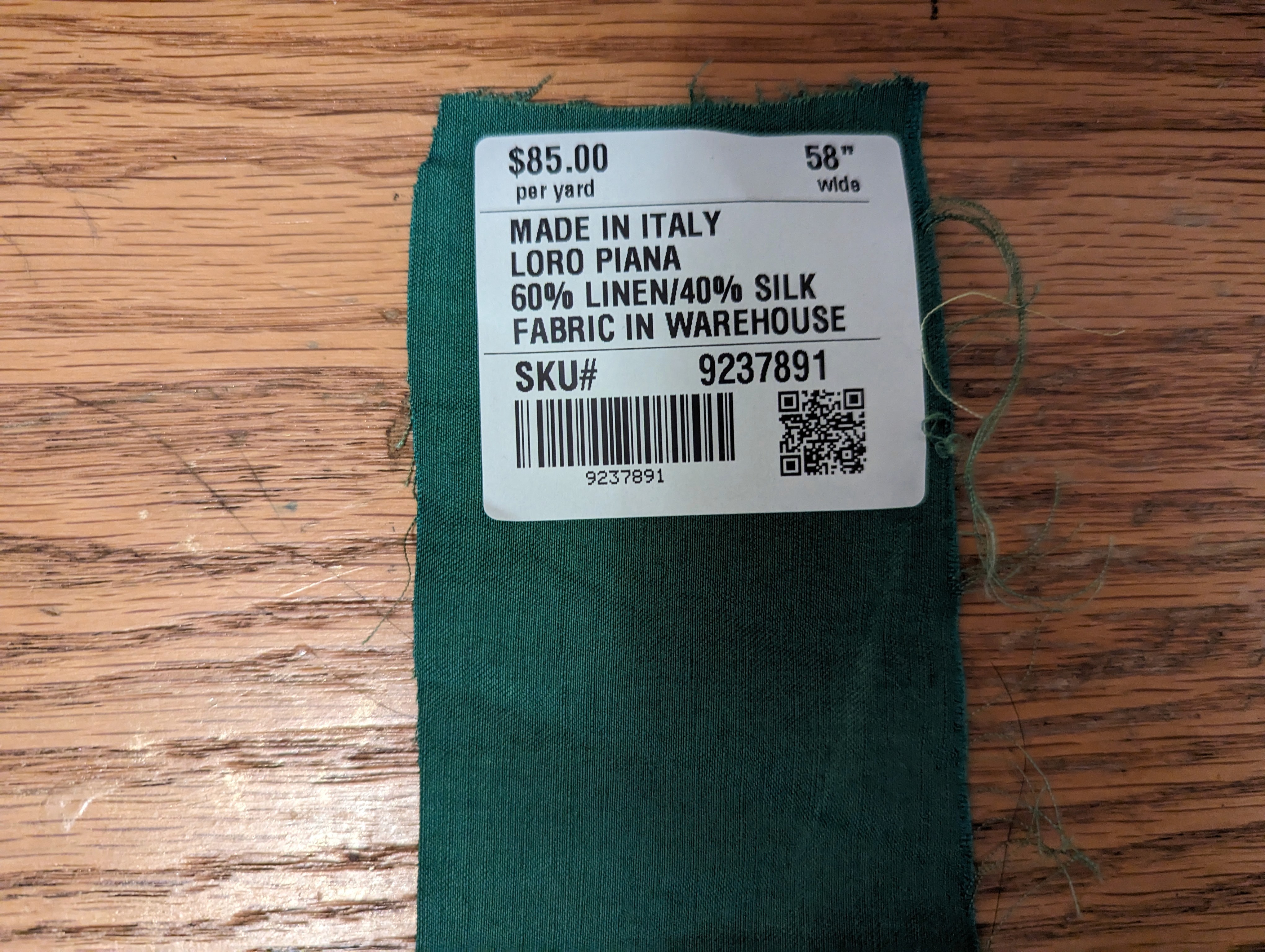
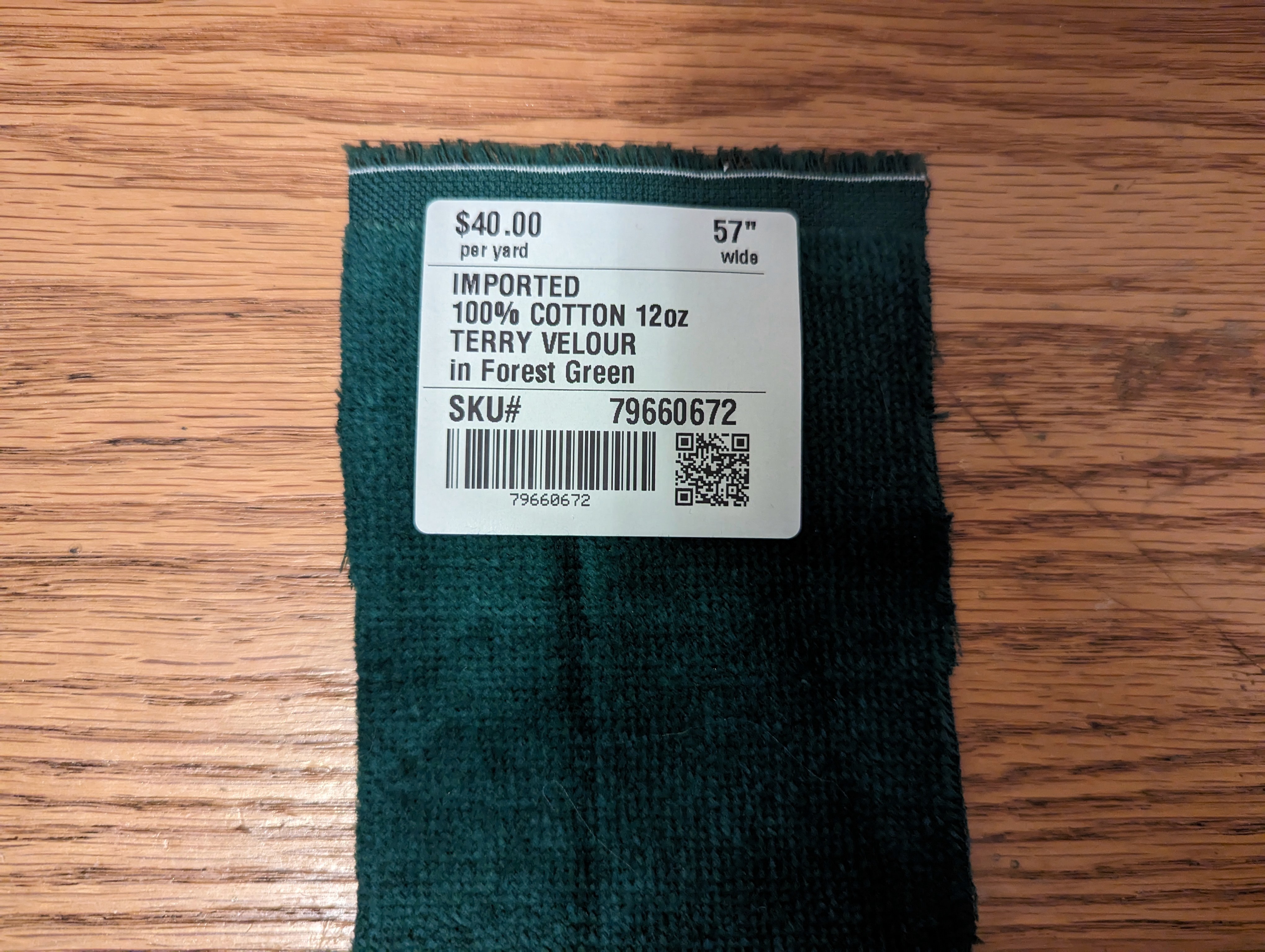
The following are just the fabrics that are in different variations with the color Green. I will bring the other fabrics I swatched to class that were of different colors and textures.
B & J Fabrics

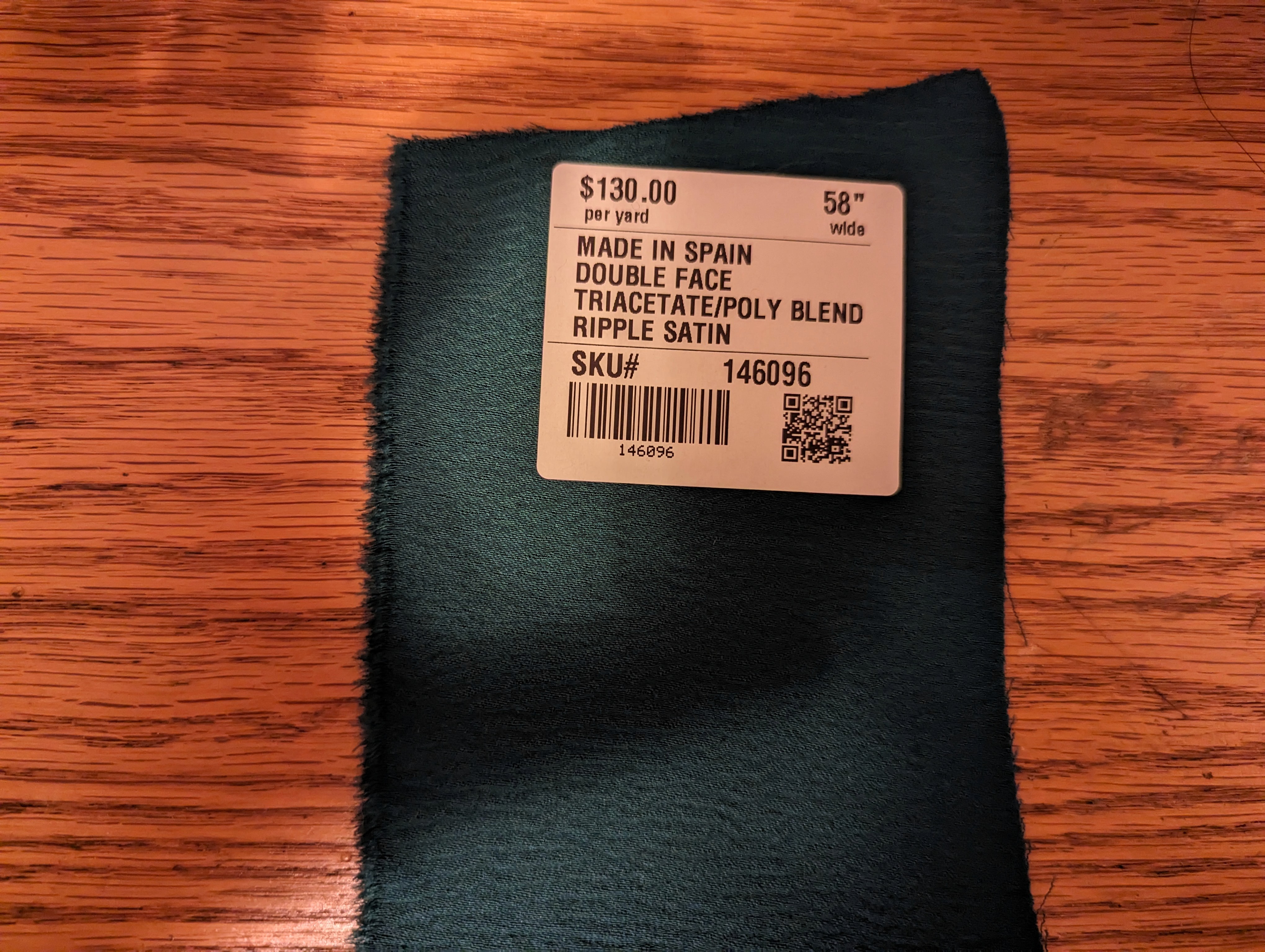
Mood Fabrics
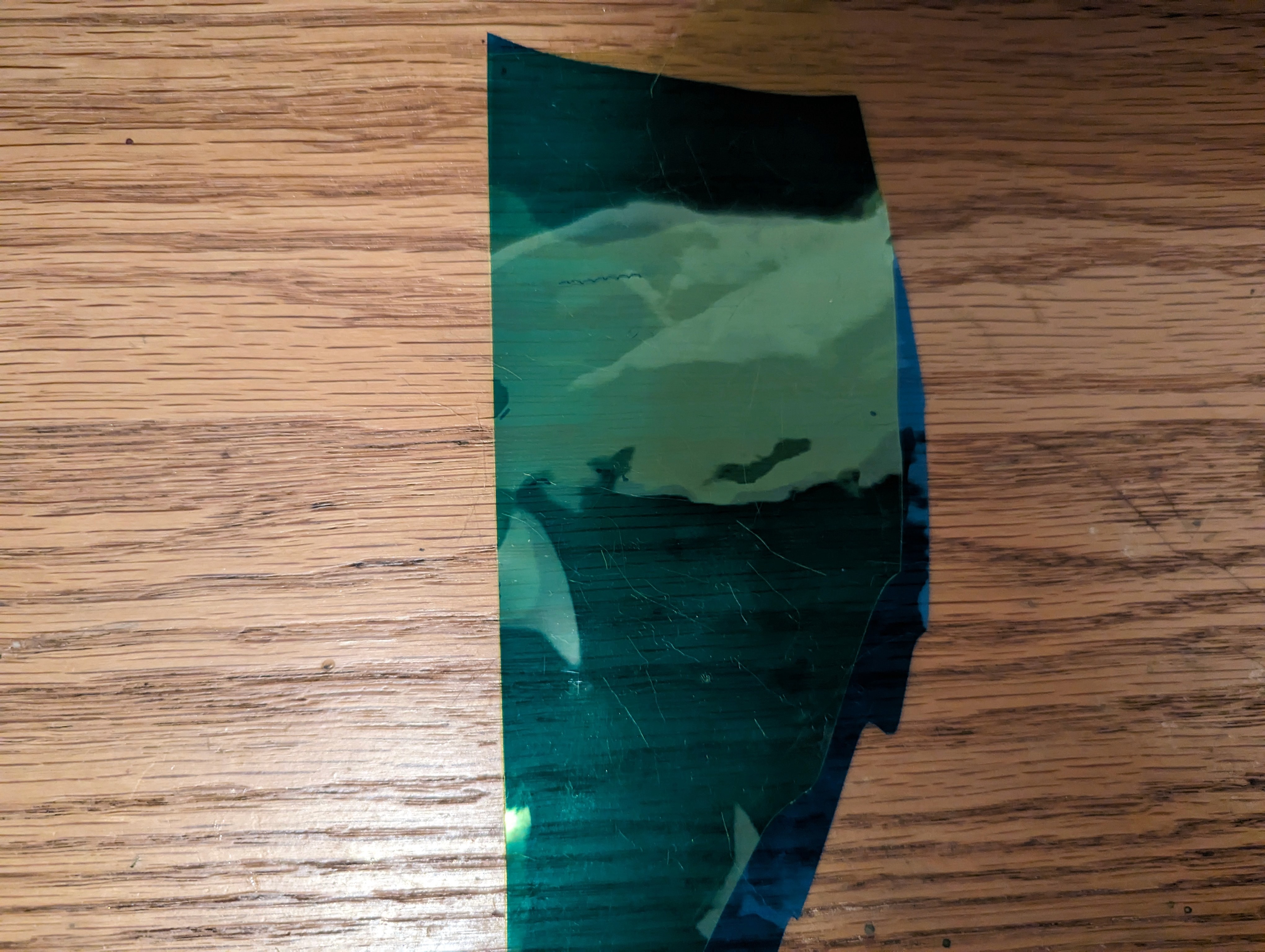
Price/Yard: $14
Fabric: 100% PVC
I choose two colors of the translucent fabric to together make the color seem like green.
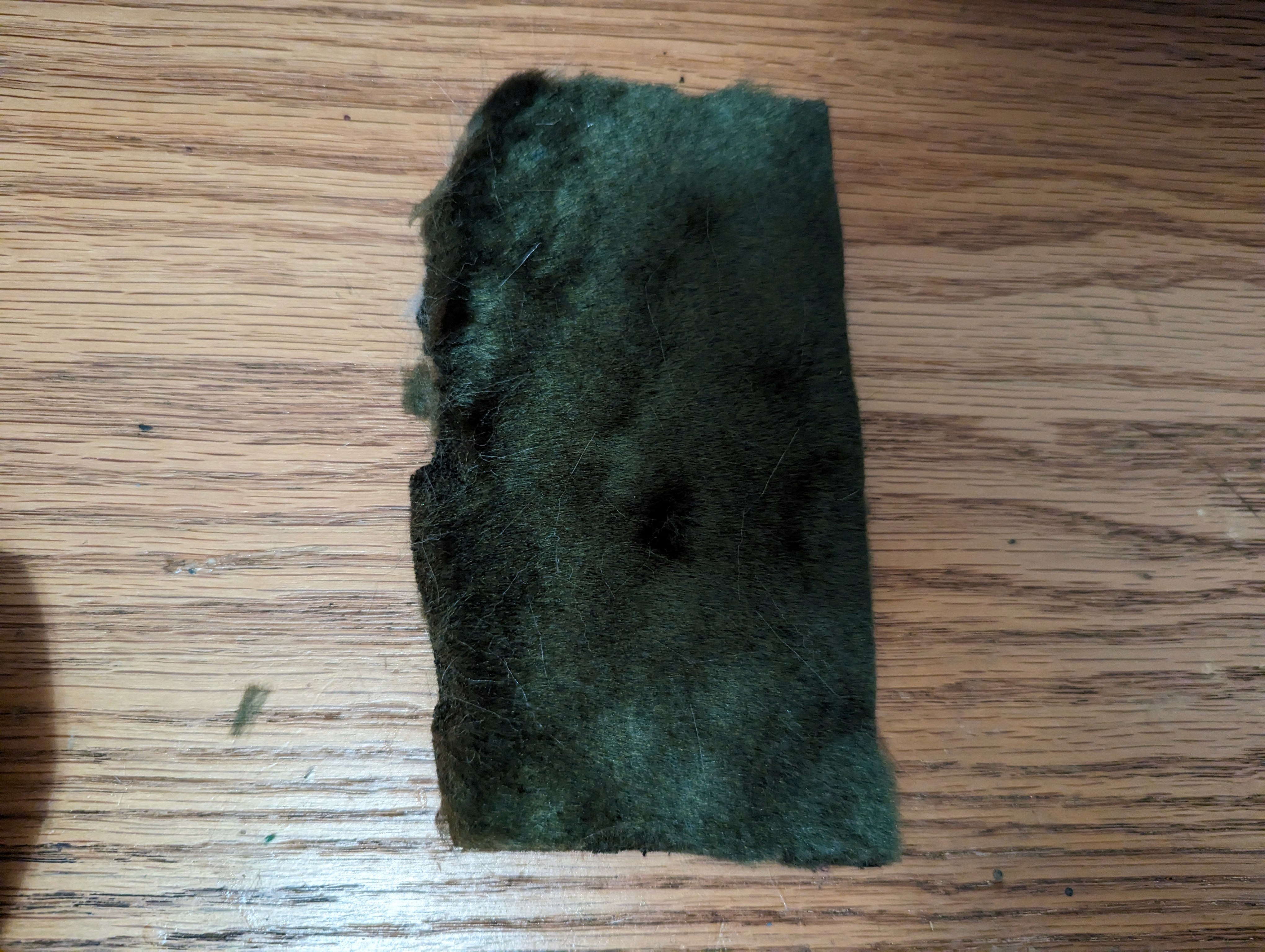
Price/Yard: $40
Fabric: Wool (maybe)
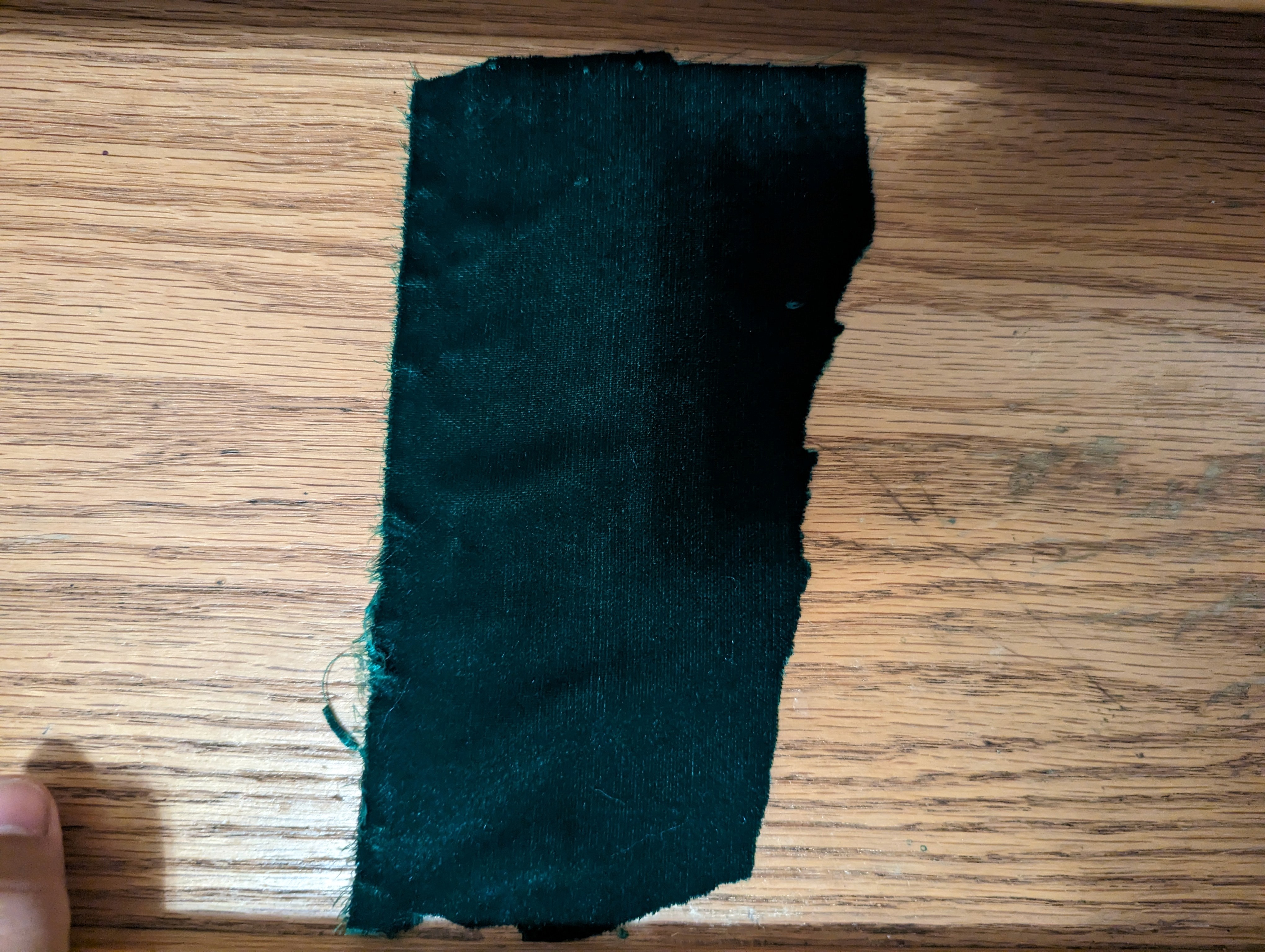
Price/Yard: $18
Fabric: Polyester Velvet
Spandex House
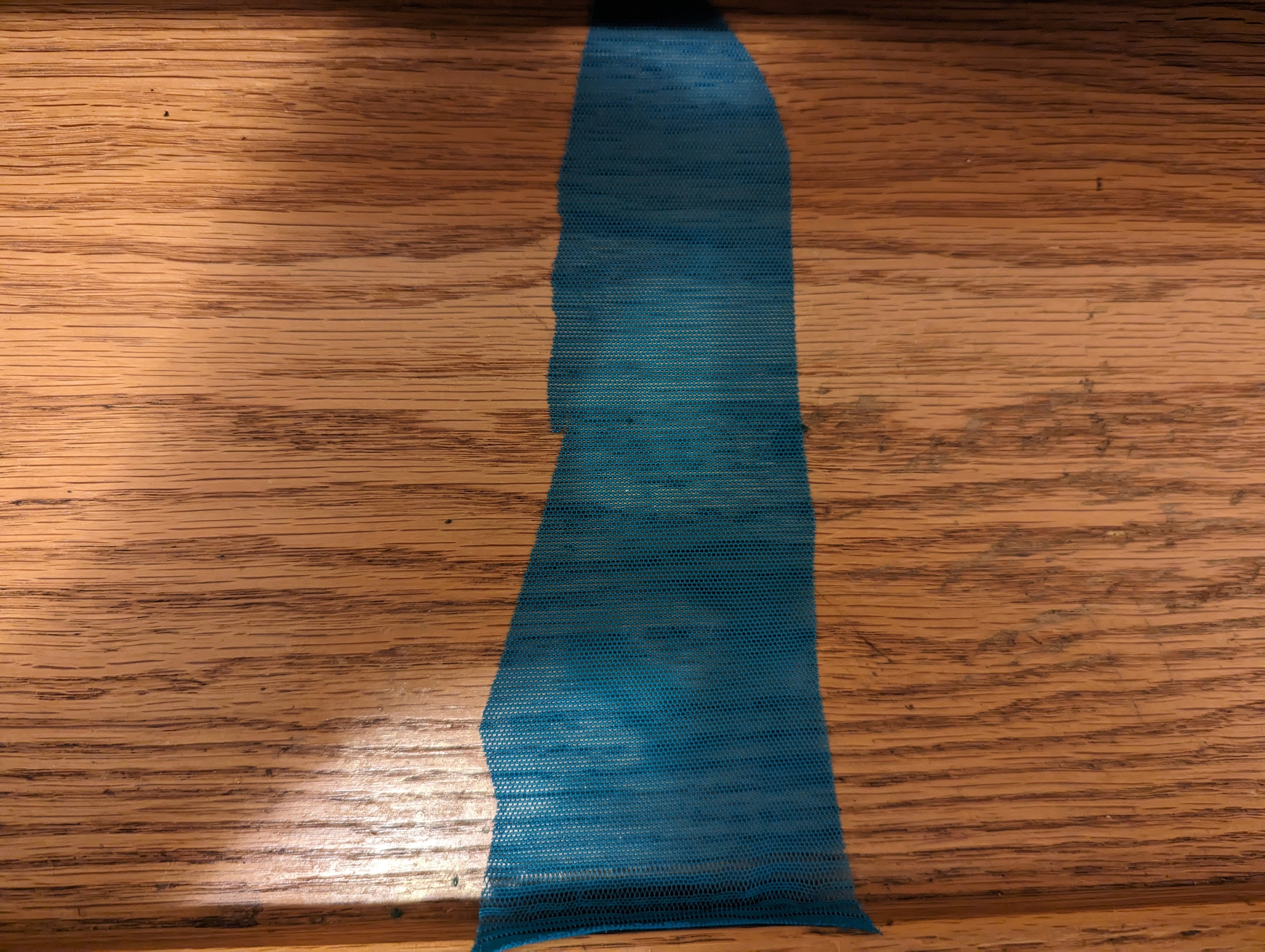
Price/Yard: $7
Fabric: Seafoam
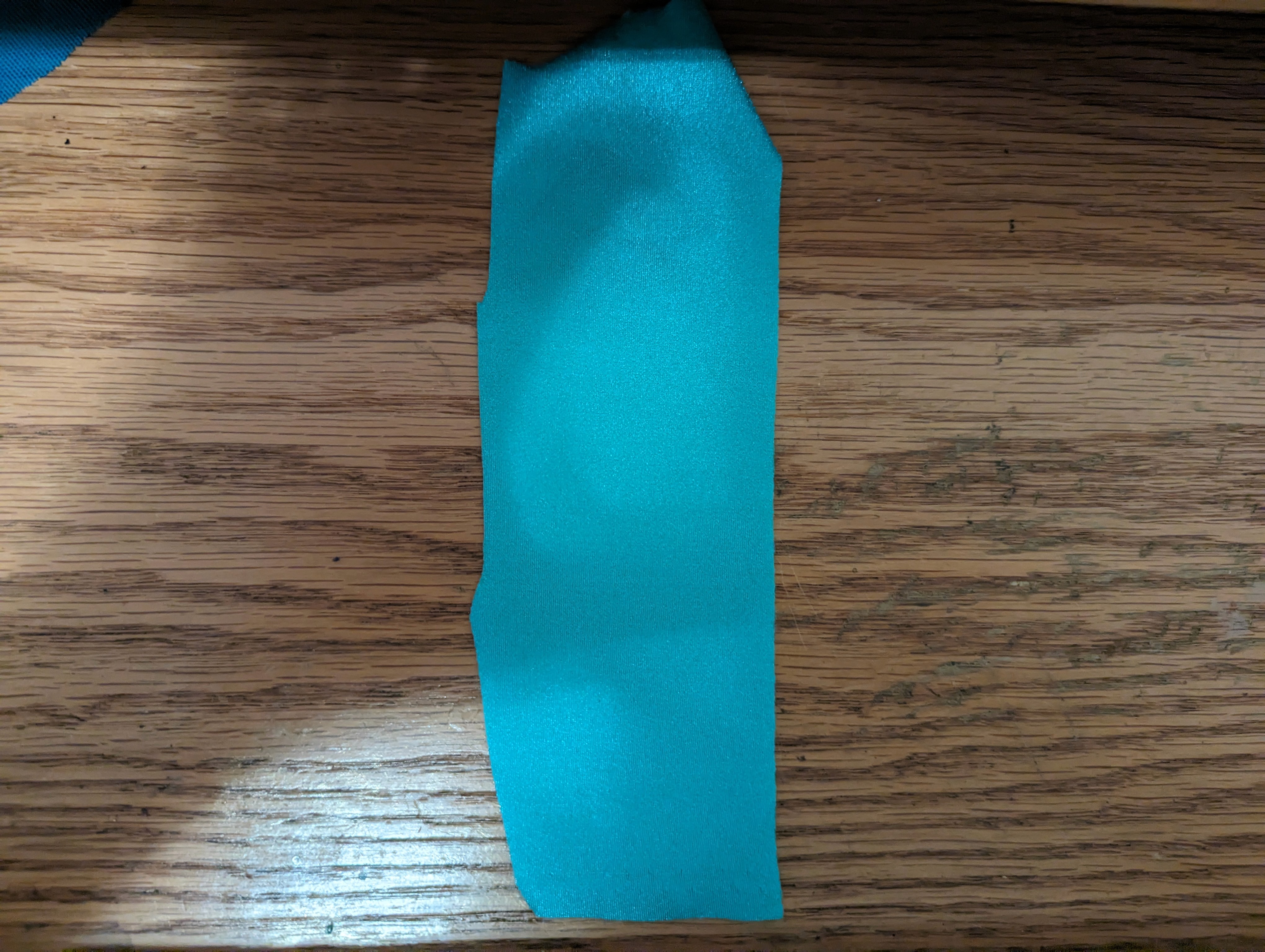
Price/Yard: $9
Fabric: Mint Green
Trimming Shops
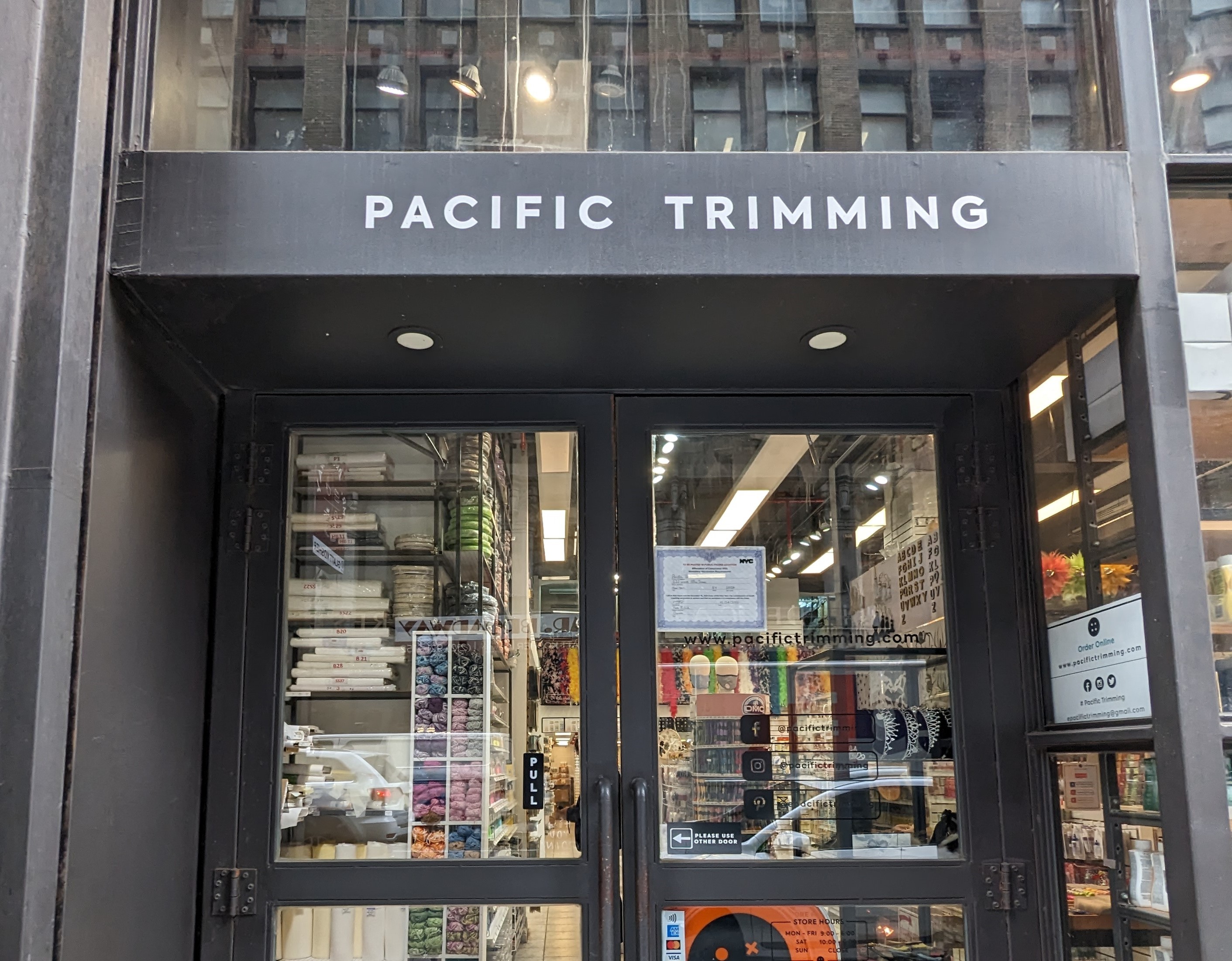
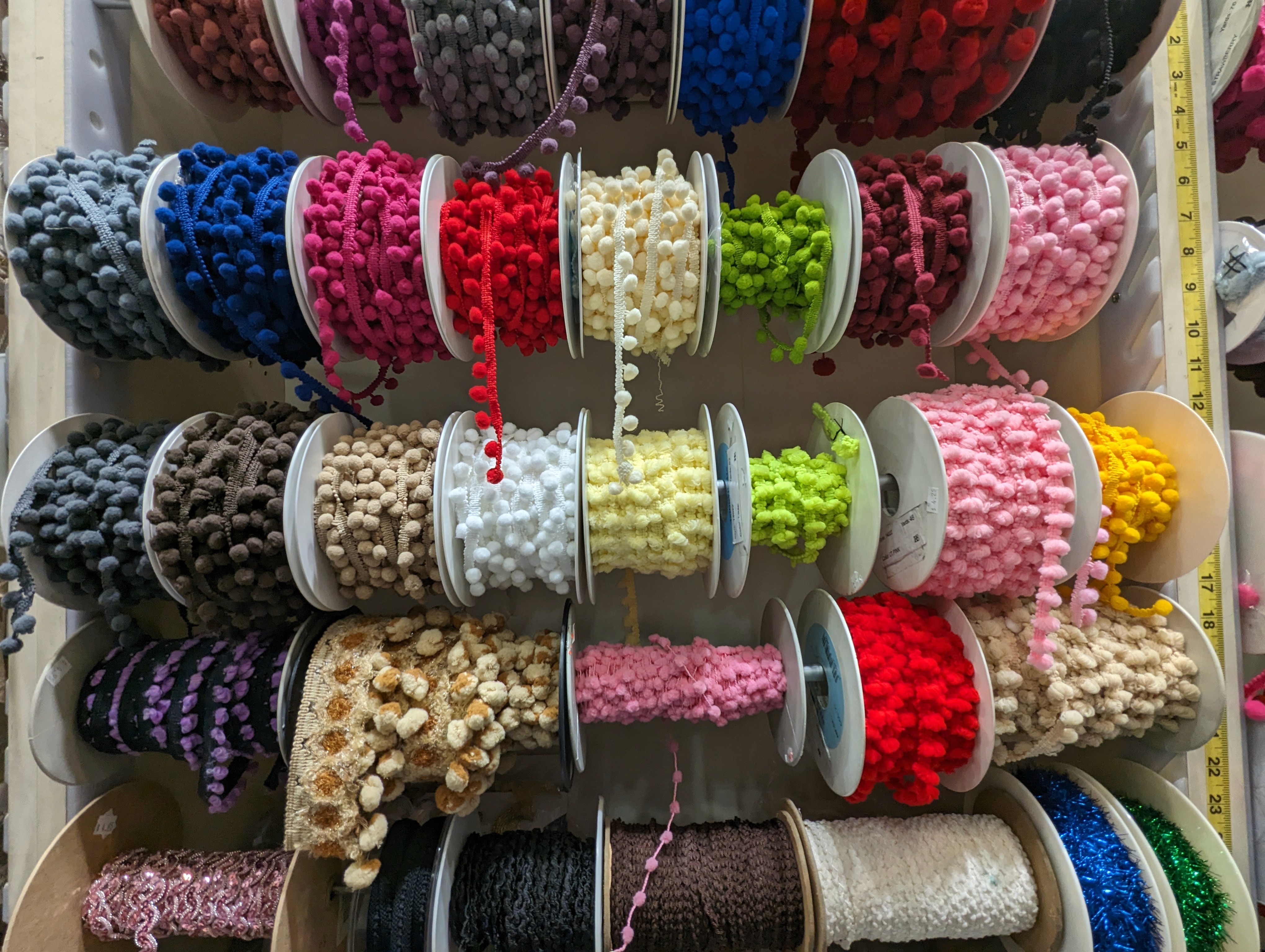
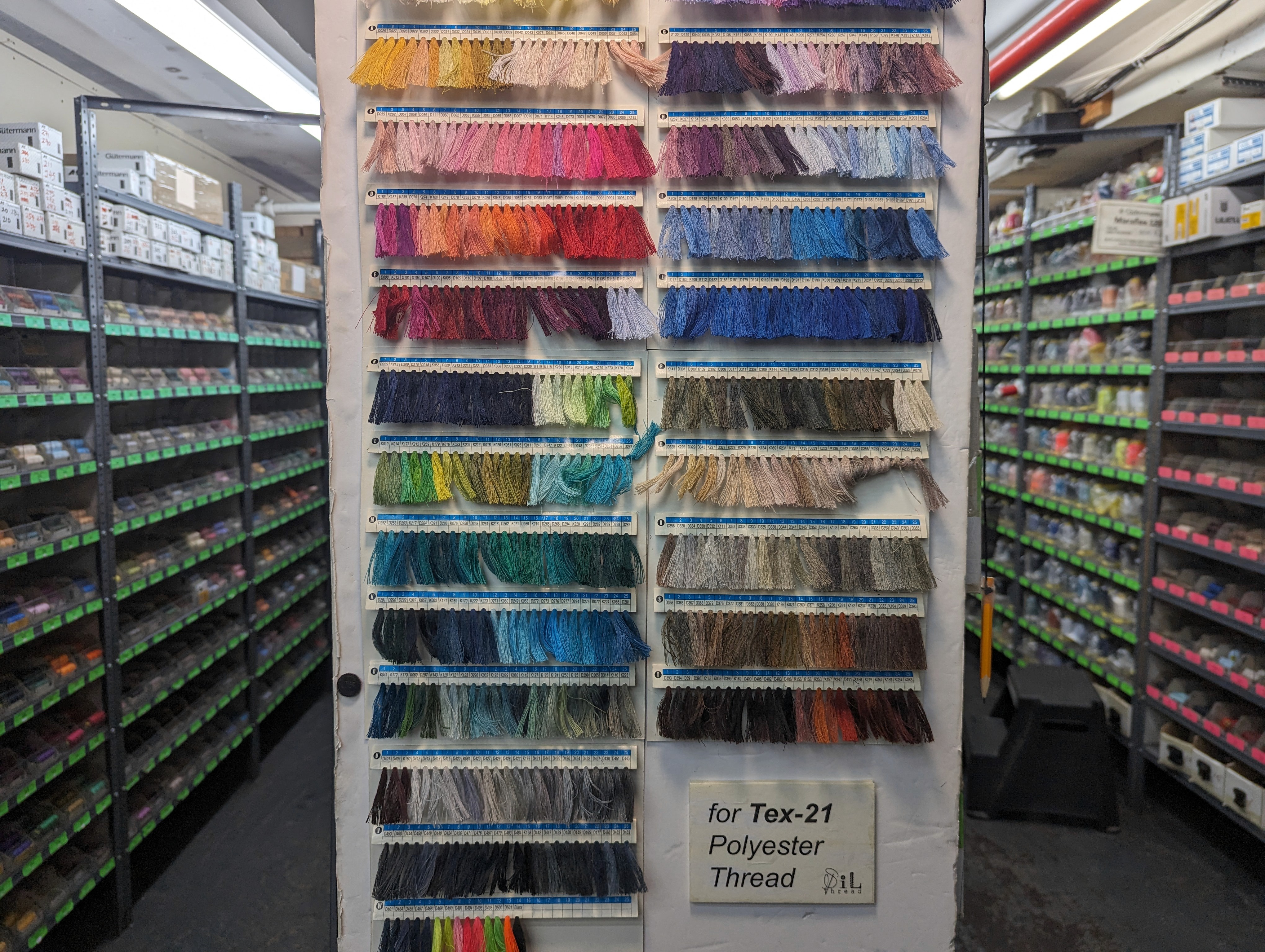
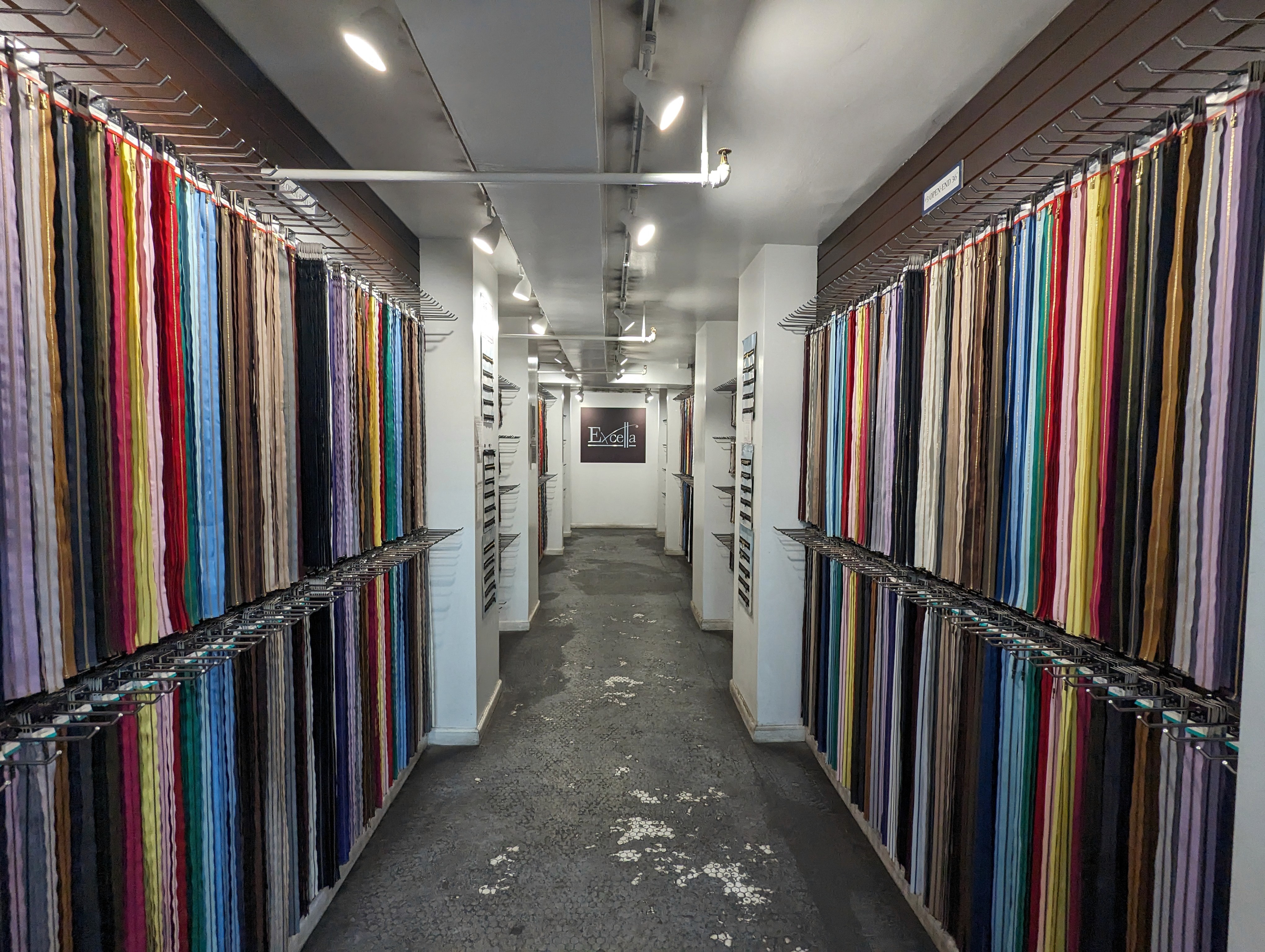
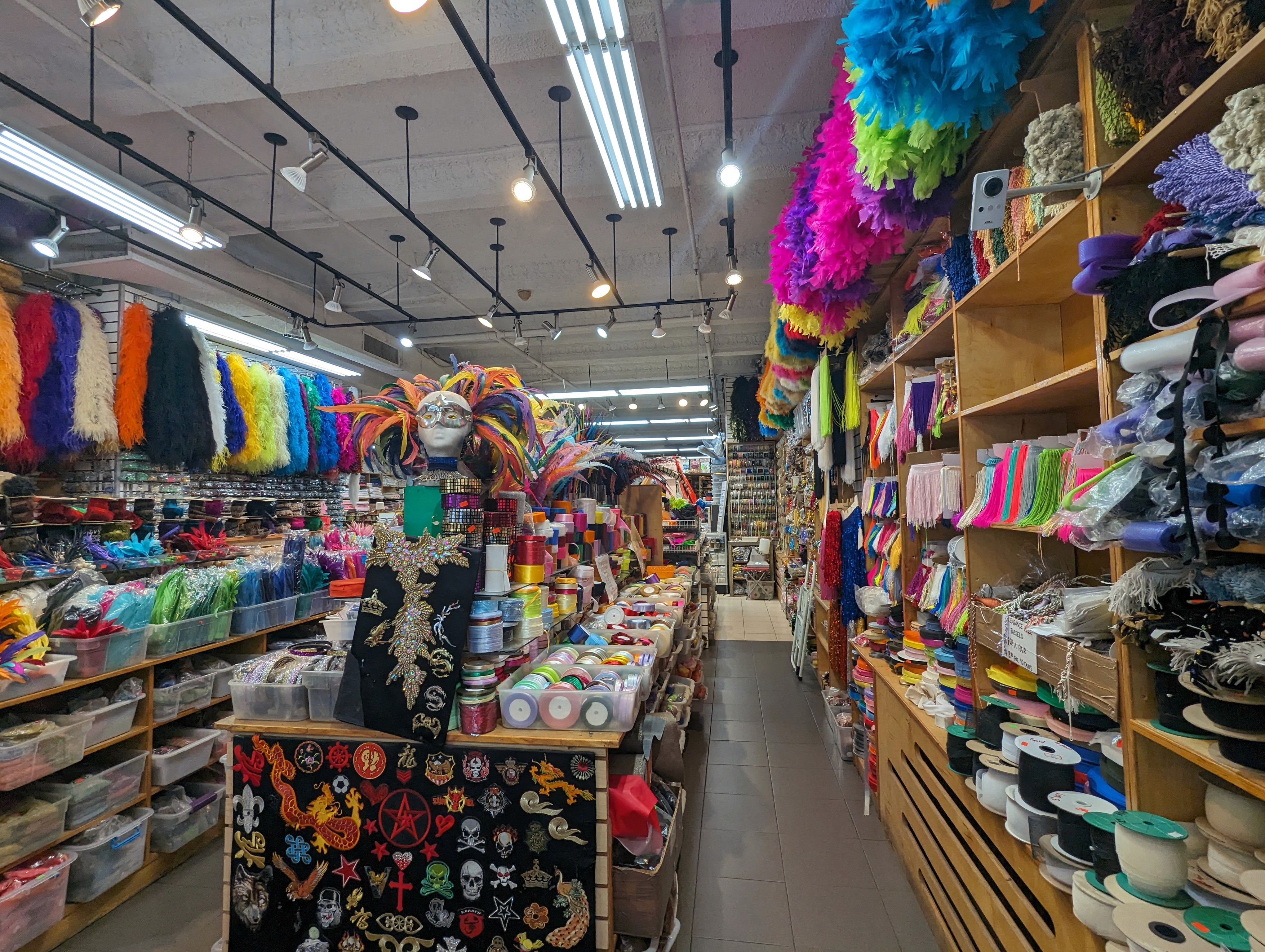
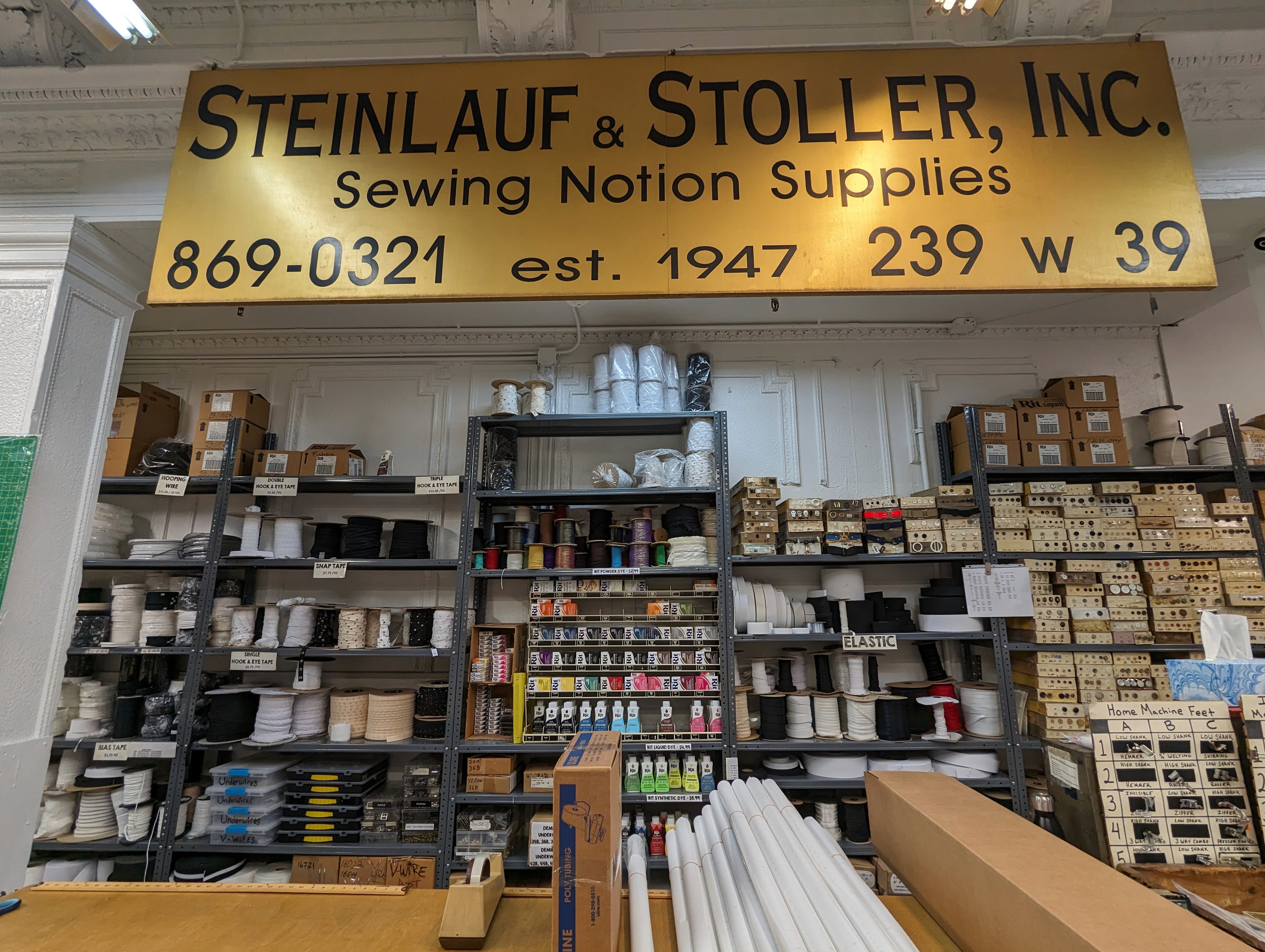
Trimming stores offer a wide array of sewing essentials, from threads and curved scales to measurement tools. Catering to diverse needs, many also provide professional knife sharpening services. These one-stop shops support both hobbyists and industry professionals in their craft.
Pacific Trimming
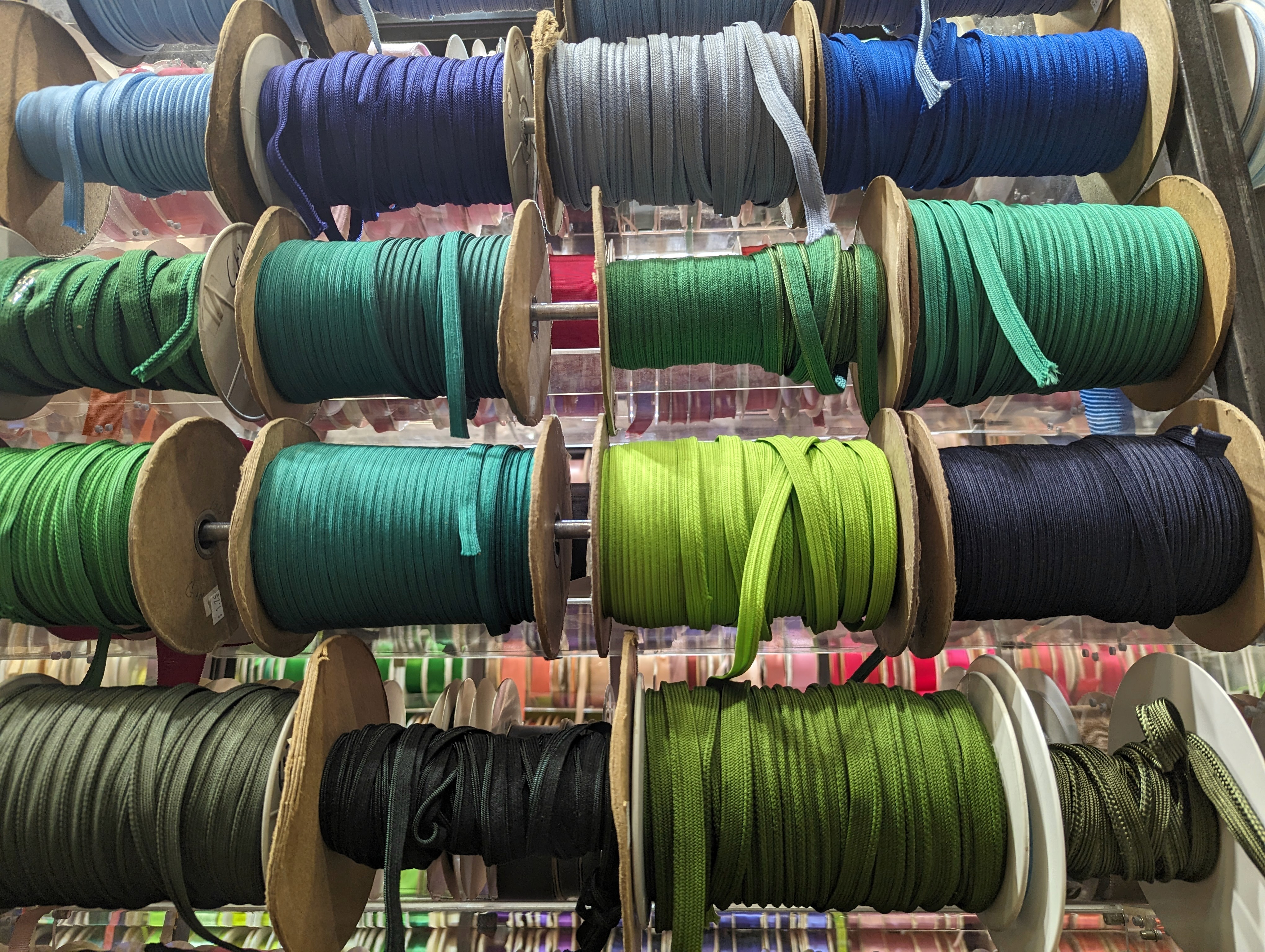
The various shades of green
SiL Thread
B&Q Trim
Steinlauf and Stoller Inc.
Tools

In class, we briefly touched upon the use of curved rulers, and I was intrigued by their significance. Later, spotting them in stores brought a sense of realization and amusement, reinforcing their pivotal role in the tailoring and designing process. It's fascinating how such simple tools can have such a profound impact on garment creation.

While browsing through a fabric store, I came across a machine that piqued my curiosity. I'm not entirely sure of its function, but my best guess is that it might be a fabric roller, used for transferring and measuring fabric. It's intriguing to discover such machinery and ponder their roles in the world of textiles.

I was astounded to learn about components like the foot and bobbin, which I hadn't realized played such vital roles in the sewing process. The sheer variety of options available for both home and industrial machines took me by surprise. It's fascinating to see the depth and complexity that goes into these devices, underscoring the blend of art and engineering inherent in the world of sewing.
My journey of swatching through the streets of the Garment District in NYC.
Preparation
As I aimed to improve my knowledge and become a more informed fabric shopper before leaving for the garment district for swatching, I watched the enlightening "How to Buy Fabric" video which proved to be an invaluable prelude to my fabric-swatching adventure in the bustling garment district. The video began by demystifying the fundamental disparity between woven and knit fabrics. Woven fabrics are generally easier to sew but exhibit less flexibility and stretch compared to their knit counterparts. As someone relatively new to the world of textiles, this clarification was very helpful. Moreover, the video illuminated the concept of the right side and the wrong side of fabrics, a crucial distinction often overlooked. Understanding that the right side is the side meant to be visible externally was a simple yet transformative realization, enhancing my ability to work with fabrics effectively.
The video delved deeper into the materials used in fabric production. It highlighted the three primary categories: natural, synthetic, and semi-synthetic. It was noted that natural fabrics can present ethical dilemmas when sourced from animals, such as leather. In contrast, synthetic fabrics typically pose environmental issues due to their reduced biodegradability. The video also underscored that while natural fabrics often command higher prices due to their authenticity, synthetic ones are becoming more sophisticated in mimicking natural textures. Furthermore, the video meticulously explored an array of fabrics, from cotton to silk, discussing their unique properties like weight, insulation, and texture. Armed with this newfound knowledge, I embarked on my fabric-shopping journey with confidence, knowing that each fabric selection would be a well-informed choice. Additionally, the video provided practical guidance on purchasing fabric in stores, touching upon critical aspects like yardage, meterage, shrinkage, and the importance of inspecting the fabric up close.
Swatching in the Fabric Shops
The following are just the fabrics that are in different variations with the color Green. I will bring the other fabrics I swatched to class that were of different colors and textures.
B & J Fabrics
Mood Fabrics
Price/Yard: $14
Fabric: 100% PVC
I choose two colors of the translucent fabric to together make the color seem like green.
Price/Yard: $40
Fabric: Wool (maybe)
Price/Yard: $18
Fabric: Polyester Velvet
Spandex House
Price/Yard: $7
Fabric: Seafoam
Price/Yard: $9
Fabric: Mint Green
Trimming Shops
Trimming stores offer a wide array of sewing essentials, from threads and curved scales to measurement tools. Catering to diverse needs, many also provide professional knife sharpening services. These one-stop shops support both hobbyists and industry professionals in their craft.
Pacific Trimming
The various shades of green
SiL Thread
B&Q Trim
Steinlauf and Stoller Inc.
Tools
In class, we briefly touched upon the use of curved rulers, and I was intrigued by their significance. Later, spotting them in stores brought a sense of realization and amusement, reinforcing their pivotal role in the tailoring and designing process. It's fascinating how such simple tools can have such a profound impact on garment creation.
While browsing through a fabric store, I came across a machine that piqued my curiosity. I'm not entirely sure of its function, but my best guess is that it might be a fabric roller, used for transferring and measuring fabric. It's intriguing to discover such machinery and ponder their roles in the world of textiles.
I was astounded to learn about components like the foot and bobbin, which I hadn't realized played such vital roles in the sewing process. The sheer variety of options available for both home and industrial machines took me by surprise. It's fascinating to see the depth and complexity that goes into these devices, underscoring the blend of art and engineering inherent in the world of sewing.
My journey of swatching through the streets of the Garment District in NYC.
Preparation
As I aimed to improve my knowledge and become a more informed fabric shopper before leaving for the garment district for swatching, I watched the enlightening "How to Buy Fabric" video which proved to be an invaluable prelude to my fabric-swatching adventure in the bustling garment district. The video began by demystifying the fundamental disparity between woven and knit fabrics. Woven fabrics are generally easier to sew but exhibit less flexibility and stretch compared to their knit counterparts. As someone relatively new to the world of textiles, this clarification was very helpful. Moreover, the video illuminated the concept of the right side and the wrong side of fabrics, a crucial distinction often overlooked. Understanding that the right side is the side meant to be visible externally was a simple yet transformative realization, enhancing my ability to work with fabrics effectively.
The video delved deeper into the materials used in fabric production. It highlighted the three primary categories: natural, synthetic, and semi-synthetic. It was noted that natural fabrics can present ethical dilemmas when sourced from animals, such as leather. In contrast, synthetic fabrics typically pose environmental issues due to their reduced biodegradability. The video also underscored that while natural fabrics often command higher prices due to their authenticity, synthetic ones are becoming more sophisticated in mimicking natural textures. Furthermore, the video meticulously explored an array of fabrics, from cotton to silk, discussing their unique properties like weight, insulation, and texture. Armed with this newfound knowledge, I embarked on my fabric-shopping journey with confidence, knowing that each fabric selection would be a well-informed choice. Additionally, the video provided practical guidance on purchasing fabric in stores, touching upon critical aspects like yardage, meterage, shrinkage, and the importance of inspecting the fabric up close.
Swatching in the Fabric Shops
The following are just the fabrics that are in different variations with the color Green. I will bring the other fabrics I swatched to class that were of different colors and textures.
B & J Fabrics
Mood Fabrics
Price/Yard: $14
Fabric: 100% PVC
I choose two colors of the translucent fabric to together make the color seem like green.
Price/Yard: $40
Fabric: Wool (maybe)
Price/Yard: $18
Fabric: Polyester Velvet
Spandex House
Price/Yard: $7
Fabric: Seafoam
Price/Yard: $9
Fabric: Mint Green
Trimming Shops
Trimming stores offer a wide array of sewing essentials, from threads and curved scales to measurement tools. Catering to diverse needs, many also provide professional knife sharpening services. These one-stop shops support both hobbyists and industry professionals in their craft.
Pacific Trimming
The various shades of green
SiL Thread
B&Q Trim
Steinlauf and Stoller Inc.
Tools
In class, we briefly touched upon the use of curved rulers, and I was intrigued by their significance. Later, spotting them in stores brought a sense of realization and amusement, reinforcing their pivotal role in the tailoring and designing process. It's fascinating how such simple tools can have such a profound impact on garment creation.
While browsing through a fabric store, I came across a machine that piqued my curiosity. I'm not entirely sure of its function, but my best guess is that it might be a fabric roller, used for transferring and measuring fabric. It's intriguing to discover such machinery and ponder their roles in the world of textiles.
I was astounded to learn about components like the foot and bobbin, which I hadn't realized played such vital roles in the sewing process. The sheer variety of options available for both home and industrial machines took me by surprise. It's fascinating to see the depth and complexity that goes into these devices, underscoring the blend of art and engineering inherent in the world of sewing.