
Final Project Progress Report
December 9, 2023
December 9, 2023
v 11.1
v 11.1
Final Project Progress Report
December 9, 2023
v 11.1
The Culmination of a Journey
As I approached the final week of my project, frustration with the Adafruit Temperature Sensor IC breakout board had reached a peak. In search of solutions, I considered various alternatives. One option was to revert to a simpler Arduino Nano board, but there was no certainty that the temperature sensor IC would work with it. Another possibility was the Arduino Nano BLE Sense, which comes with a built-in temperature and humidity sensor. However, this option strayed from my original concept, where the sensor needed to be in contact with the body. After much deliberation, I decided that my best bet would be to use a TMP36 analog temperature sensor, which I could connect to an analog pin on the Arduino and read the temperature with some basic calculations.
I obtained the TMP36 sensor from my professor and set to work. Initially, I encountered some issues with the connections, but soon enough, it started working. The sensor's temperature readings were consistent with my expectations for the room's ambient temperature and changed when placed near my heated laptop, affirming its responsiveness.
With the temperature sensor operational, my next task was to integrate it with the neopixel ring. My vision was to create three temperature ranges, each triggering a specific color and pattern on the neopixel: red for hot, a purple spectrum for medium, and blue for cold. I programmed the various color patterns and set up both components on their respective pins. An essential part of this process was ensuring that the temperature ranges were dynamically set at startup, allowing for slight deviations and enabling the observation of all three patterns. I avoided hardcoding values, which provided flexibility to adjust the increments later. The temperature was calculated by averaging ten readings, providing a reliable measure.
After integrating the sensor and the neopixel, the next major step was figuring out the power supply. I charged up a flat battery and successfully used it to power the Arduino, marking another crucial milestone in the project.
During the final assembly phase, an unexpected battery issue threw a wrench in the works. As I was connecting the circuit with jumper wires, one wire detached from the battery terminal, closely followed by the second, resulting in a completely detached power source. This instantly turned into a nightmare: soldering wires onto the tiny and sensitive terminals of a lithium-ion battery, where the stakes were as high as the risk of the battery burning itself out. The challenge was multifaceted; not only was the surface area small and hard to access, but the proximity of the terminals meant that even a slight error could cause a short circuit. It took an hour of meticulous soldering, using a magnifying glass for precision, and a strategic approach of pre-soldering the wires to prevent the spread across terminals. After a tense moment when the battery began to heat up dangerously, necessitating quick action with a solder sucker, I finally secured both wires. A thorough check with a multimeter confirmed no short circuits, and I wrapped the terminals in insulating tape to ensure the internal safety of my pendant, readying it for its place within the transparent ball.
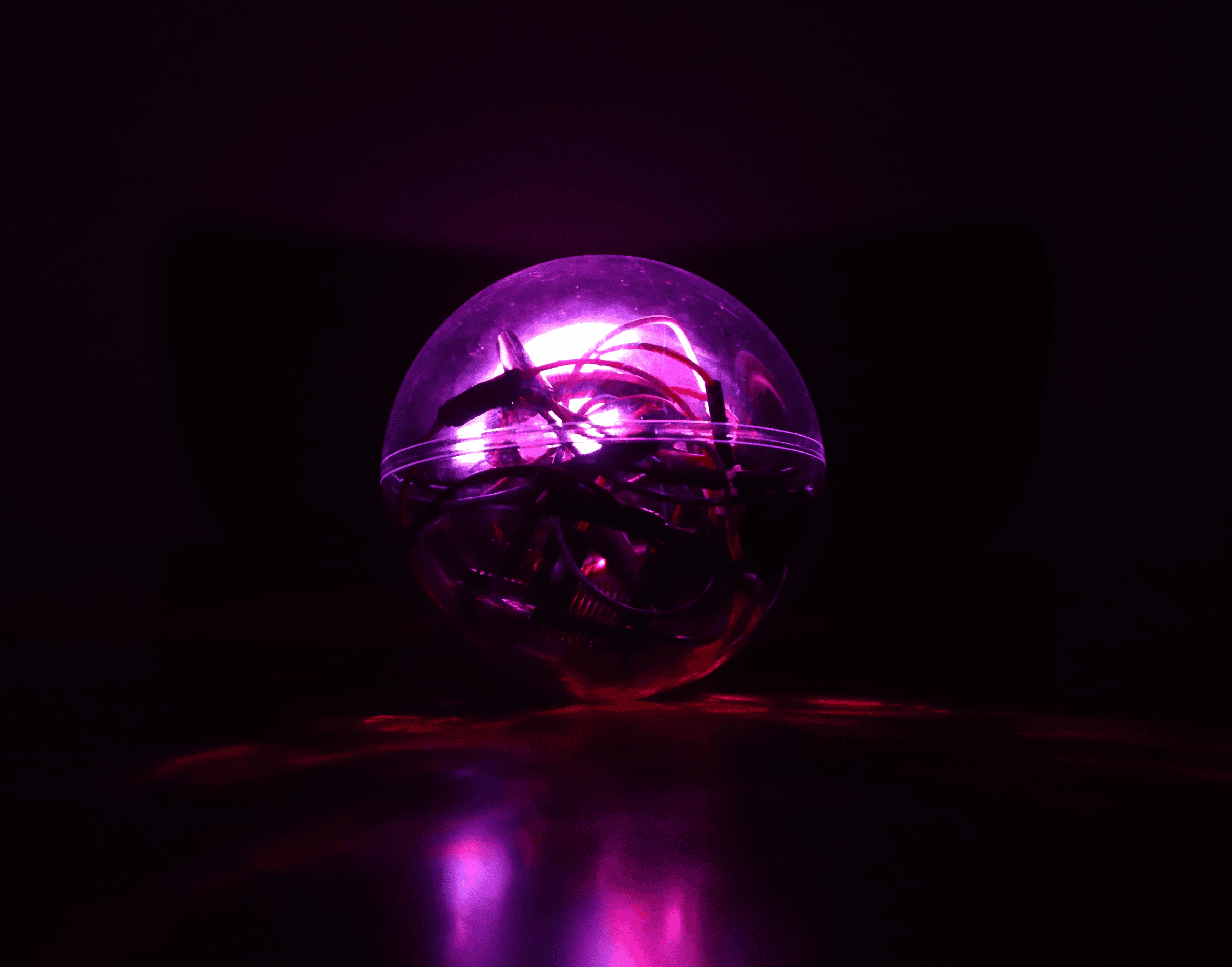
Simultaneously, the outer shell casing for my project arrived. The initial size was larger than I anticipated, which seemed impractical for wearability. I settled on the smallest available size for prototyping—a clear, transparent ball often seen in Christmas decorations. It was spacious enough to house the Nano 33 IoT, connecting wires, the neopixel ring, the flat battery, and the temperature sensor. Everything fit perfectly inside, with no internal movement or wobbling.
As I assembled the final prototype, it was a moment of true accomplishment. The project, in all its glory, was a tangible result of weeks of perseverance and learning. I took numerous photos and videos for documentation, thoroughly tested the device, and prepared for the final presentation.
The upcoming presentation day will mark the culmination of this incredible journey. I am currently preparing to confidently demonstrate my project to the class, not only showcasing a functioning prototype but also sharing the story behind its creation—a narrative woven through challenges, learning, and eventual success. This presentation will be an opportunity to bring my audience along on the developmental path of the project, highlighting the perseverance and innovation that drove it to fruition. This project was more than just a grade; it was a testament to the journey of turning an idea into reality, the embodiment of innovation and resilience.
As I conclude this chapter, I look back with pride and forward with excitement to future endeavors in the world of technology and innovation. Stay tuned for the next journey!
__
___
The Culmination of a Journey
As I approached the final week of my project, frustration with the Adafruit Temperature Sensor IC breakout board had reached a peak. In search of solutions, I considered various alternatives. One option was to revert to a simpler Arduino Nano board, but there was no certainty that the temperature sensor IC would work with it. Another possibility was the Arduino Nano BLE Sense, which comes with a built-in temperature and humidity sensor. However, this option strayed from my original concept, where the sensor needed to be in contact with the body. After much deliberation, I decided that my best bet would be to use a TMP36 analog temperature sensor, which I could connect to an analog pin on the Arduino and read the temperature with some basic calculations.
I obtained the TMP36 sensor from my professor and set to work. Initially, I encountered some issues with the connections, but soon enough, it started working. The sensor's temperature readings were consistent with my expectations for the room's ambient temperature and changed when placed near my heated laptop, affirming its responsiveness.
With the temperature sensor operational, my next task was to integrate it with the neopixel ring. My vision was to create three temperature ranges, each triggering a specific color and pattern on the neopixel: red for hot, a purple spectrum for medium, and blue for cold. I programmed the various color patterns and set up both components on their respective pins. An essential part of this process was ensuring that the temperature ranges were dynamically set at startup, allowing for slight deviations and enabling the observation of all three patterns. I avoided hardcoding values, which provided flexibility to adjust the increments later. The temperature was calculated by averaging ten readings, providing a reliable measure.
After integrating the sensor and the neopixel, the next major step was figuring out the power supply. I charged up a flat battery and successfully used it to power the Arduino, marking another crucial milestone in the project.
During the final assembly phase, an unexpected battery issue threw a wrench in the works. As I was connecting the circuit with jumper wires, one wire detached from the battery terminal, closely followed by the second, resulting in a completely detached power source. This instantly turned into a nightmare: soldering wires onto the tiny and sensitive terminals of a lithium-ion battery, where the stakes were as high as the risk of the battery burning itself out. The challenge was multifaceted; not only was the surface area small and hard to access, but the proximity of the terminals meant that even a slight error could cause a short circuit. It took an hour of meticulous soldering, using a magnifying glass for precision, and a strategic approach of pre-soldering the wires to prevent the spread across terminals. After a tense moment when the battery began to heat up dangerously, necessitating quick action with a solder sucker, I finally secured both wires. A thorough check with a multimeter confirmed no short circuits, and I wrapped the terminals in insulating tape to ensure the internal safety of my pendant, readying it for its place within the transparent ball.
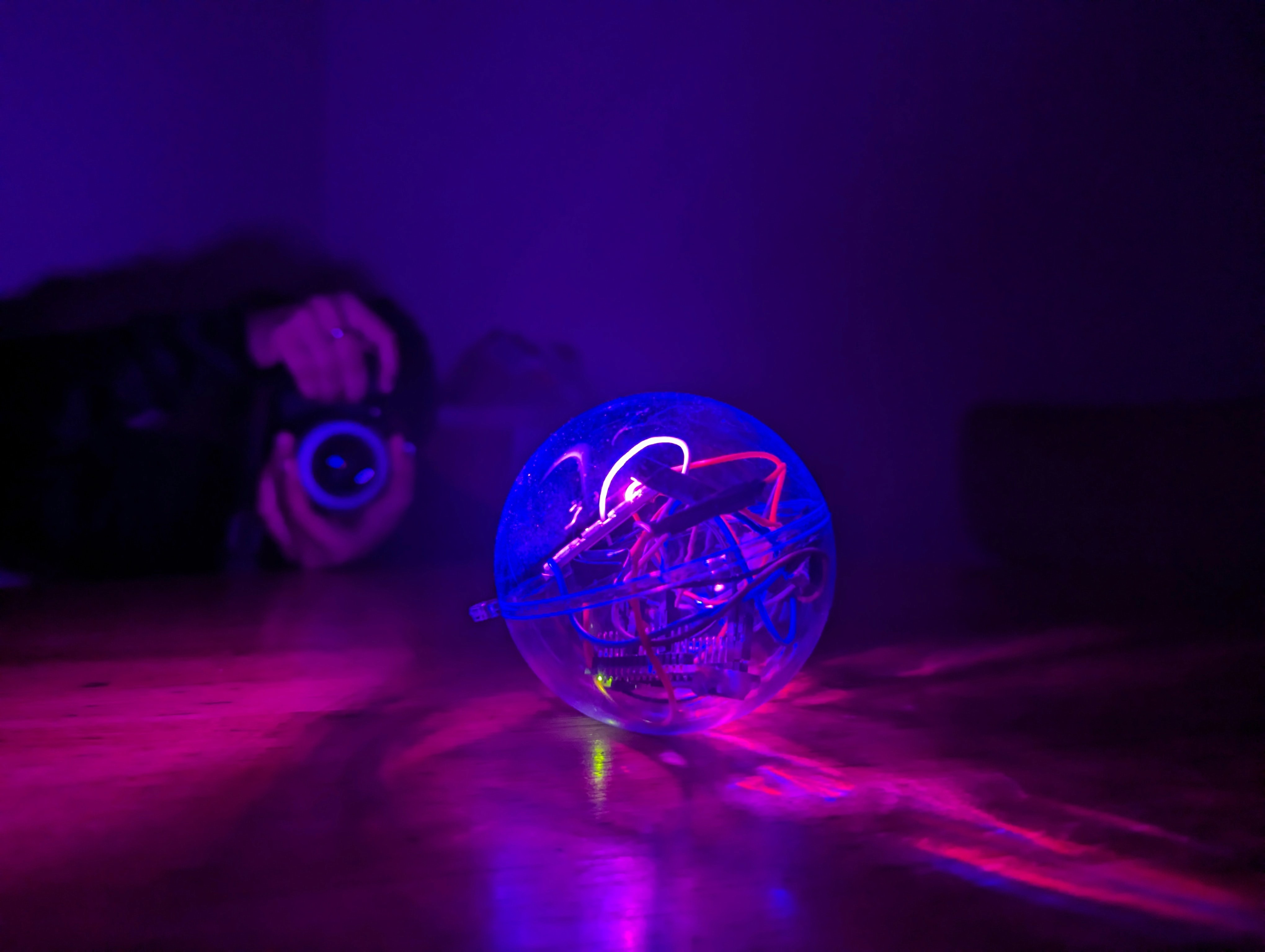
Simultaneously, the outer shell casing for my project arrived. The initial size was larger than I anticipated, which seemed impractical for wearability. I settled on the smallest available size for prototyping—a clear, transparent ball often seen in Christmas decorations. It was spacious enough to house the Nano 33 IoT, connecting wires, the neopixel ring, the flat battery, and the temperature sensor. Everything fit perfectly inside, with no internal movement or wobbling.
As I assembled the final prototype, it was a moment of true accomplishment. The project, in all its glory, was a tangible result of weeks of perseverance and learning. I took numerous photos and videos for documentation, thoroughly tested the device, and prepared for the final presentation.
The upcoming presentation day will mark the culmination of this incredible journey. I am currently preparing to confidently demonstrate my project to the class, not only showcasing a functioning prototype but also sharing the story behind its creation—a narrative woven through challenges, learning, and eventual success. This presentation will be an opportunity to bring my audience along on the developmental path of the project, highlighting the perseverance and innovation that drove it to fruition. This project was more than just a grade; it was a testament to the journey of turning an idea into reality, the embodiment of innovation and resilience.
As I conclude this chapter, I look back with pride and forward with excitement to future endeavors in the world of technology and innovation. Stay tuned for the next journey!
__
___
The Culmination of a Journey
As I approached the final week of my project, frustration with the Adafruit Temperature Sensor IC breakout board had reached a peak. In search of solutions, I considered various alternatives. One option was to revert to a simpler Arduino Nano board, but there was no certainty that the temperature sensor IC would work with it. Another possibility was the Arduino Nano BLE Sense, which comes with a built-in temperature and humidity sensor. However, this option strayed from my original concept, where the sensor needed to be in contact with the body. After much deliberation, I decided that my best bet would be to use a TMP36 analog temperature sensor, which I could connect to an analog pin on the Arduino and read the temperature with some basic calculations.
I obtained the TMP36 sensor from my professor and set to work. Initially, I encountered some issues with the connections, but soon enough, it started working. The sensor's temperature readings were consistent with my expectations for the room's ambient temperature and changed when placed near my heated laptop, affirming its responsiveness.
With the temperature sensor operational, my next task was to integrate it with the neopixel ring. My vision was to create three temperature ranges, each triggering a specific color and pattern on the neopixel: red for hot, a purple spectrum for medium, and blue for cold. I programmed the various color patterns and set up both components on their respective pins. An essential part of this process was ensuring that the temperature ranges were dynamically set at startup, allowing for slight deviations and enabling the observation of all three patterns. I avoided hardcoding values, which provided flexibility to adjust the increments later. The temperature was calculated by averaging ten readings, providing a reliable measure.
After integrating the sensor and the neopixel, the next major step was figuring out the power supply. I charged up a flat battery and successfully used it to power the Arduino, marking another crucial milestone in the project.
During the final assembly phase, an unexpected battery issue threw a wrench in the works. As I was connecting the circuit with jumper wires, one wire detached from the battery terminal, closely followed by the second, resulting in a completely detached power source. This instantly turned into a nightmare: soldering wires onto the tiny and sensitive terminals of a lithium-ion battery, where the stakes were as high as the risk of the battery burning itself out. The challenge was multifaceted; not only was the surface area small and hard to access, but the proximity of the terminals meant that even a slight error could cause a short circuit. It took an hour of meticulous soldering, using a magnifying glass for precision, and a strategic approach of pre-soldering the wires to prevent the spread across terminals. After a tense moment when the battery began to heat up dangerously, necessitating quick action with a solder sucker, I finally secured both wires. A thorough check with a multimeter confirmed no short circuits, and I wrapped the terminals in insulating tape to ensure the internal safety of my pendant, readying it for its place within the transparent ball.
Simultaneously, the outer shell casing for my project arrived. The initial size was larger than I anticipated, which seemed impractical for wearability. I settled on the smallest available size for prototyping—a clear, transparent ball often seen in Christmas decorations. It was spacious enough to house the Nano 33 IoT, connecting wires, the neopixel ring, the flat battery, and the temperature sensor. Everything fit perfectly inside, with no internal movement or wobbling.
As I assembled the final prototype, it was a moment of true accomplishment. The project, in all its glory, was a tangible result of weeks of perseverance and learning. I took numerous photos and videos for documentation, thoroughly tested the device, and prepared for the final presentation.
The upcoming presentation day will mark the culmination of this incredible journey. I am currently preparing to confidently demonstrate my project to the class, not only showcasing a functioning prototype but also sharing the story behind its creation—a narrative woven through challenges, learning, and eventual success. This presentation will be an opportunity to bring my audience along on the developmental path of the project, highlighting the perseverance and innovation that drove it to fruition. This project was more than just a grade; it was a testament to the journey of turning an idea into reality, the embodiment of innovation and resilience.
As I conclude this chapter, I look back with pride and forward with excitement to future endeavors in the world of technology and innovation. Stay tuned for the next journey!
__
___